
Table of contents
Important Note: This post is intended as a general educational overview of Ontario fire code requirements for commercial properties. It does not constitute legal or regulatory advice. Requirements vary by building type, occupancy classification, municipality, and jurisdiction. Business owners should consult with a qualified fire safety professional and their local fire department for guidance specific to their property and operations.
Fire is one of the most destructive risks a business can face — and unlike many other threats, it is one that Ontario law requires you to actively prepare for. The Ontario Fire Code establishes mandatory requirements for fire detection, alarm systems, emergency planning, and ongoing inspection and maintenance across virtually every category of commercial property in the province.
For many business owners, fire code compliance is something they think about when a fire inspector visits — and not much in between. That approach carries real risk. Non-compliance with the Ontario Fire Code can result in orders to remedy, fines, forced closure, and in a fire event, denied insurance claims. More importantly, the requirements exist for a reason: properly designed, installed, and maintained fire alarm systems save lives and protect property.
This post provides a plain-language overview of what Ontario’s commercial fire code requires, how compliance works in practice, and what business owners need to do to ensure their properties are properly protected and legally compliant.

The Ontario Fire Code: A Plain-Language Overview
The Ontario Fire Code is a regulation made under the Fire Protection and Prevention Act, 1997. It establishes minimum fire safety standards for the construction, use, and occupancy of buildings throughout the province. It is enforced by local fire departments and applies to virtually all commercial, industrial, institutional, and multi-residential properties.
The Fire Code is updated periodically — the most recent revision brought Ontario’s code into closer alignment with the National Fire Code of Canada — and it is supplemented by the Ontario Building Code for new construction and the requirements of the Ontario Electrical Safety Code for electrical systems. For most business owners, the relevant starting point is understanding how the Fire Code applies to their specific building type and occupancy classification.
Occupancy Classification and Why It Matters
The Ontario Fire Code organizes properties by occupancy classification — the type of use the building is put to — and different classifications carry different requirements. Common commercial classifications include:
- Group A — Assembly occupancies: restaurants, theatres, places of worship, arenas, and other spaces used for gatherings of people
- Group B — Care and detention occupancies: hospitals, nursing homes, and correctional facilities
- Group C — Residential occupancies: apartment buildings and other multi-residential properties
- Group D — Business and personal services occupancies: offices, banks, professional services, and similar environments
- Group E — Mercantile occupancies: retail stores, shopping centres, and similar commercial spaces
- Group F — Industrial occupancies: factories, warehouses, repair shops, and manufacturing facilities
Within each classification, requirements vary further based on building size, height, number of occupants, and the specific hazards associated with the use. A small Group E retail store has different requirements than a large Group F warehouse, even though both are commercial properties subject to the Fire Code.
If you are unsure of your building’s occupancy classification or how the Fire Code applies to your specific property, contact your local fire department or consult with a certified fire protection professional. Getting this wrong has real consequences.
Key Fire Code Requirements for Ontario Commercial Properties
While the specific requirements for any given property depend on its classification, size, and use, there are several core obligations that apply broadly across commercial properties in Ontario.
Fire Alarm Systems
The Ontario Fire Code requires fire alarm systems in most commercial buildings above a certain size or occupancy threshold. The specific trigger points vary by occupancy classification, but in general terms, commercial buildings that can accommodate a significant number of occupants, that are used for sleeping, or that involve certain industrial or storage uses will be required to have a fire alarm system.
Required fire alarm systems must:
- Be installed and maintained in accordance with the National Fire Alarm and Signalling Code (NFPA 72) and relevant ULC standards
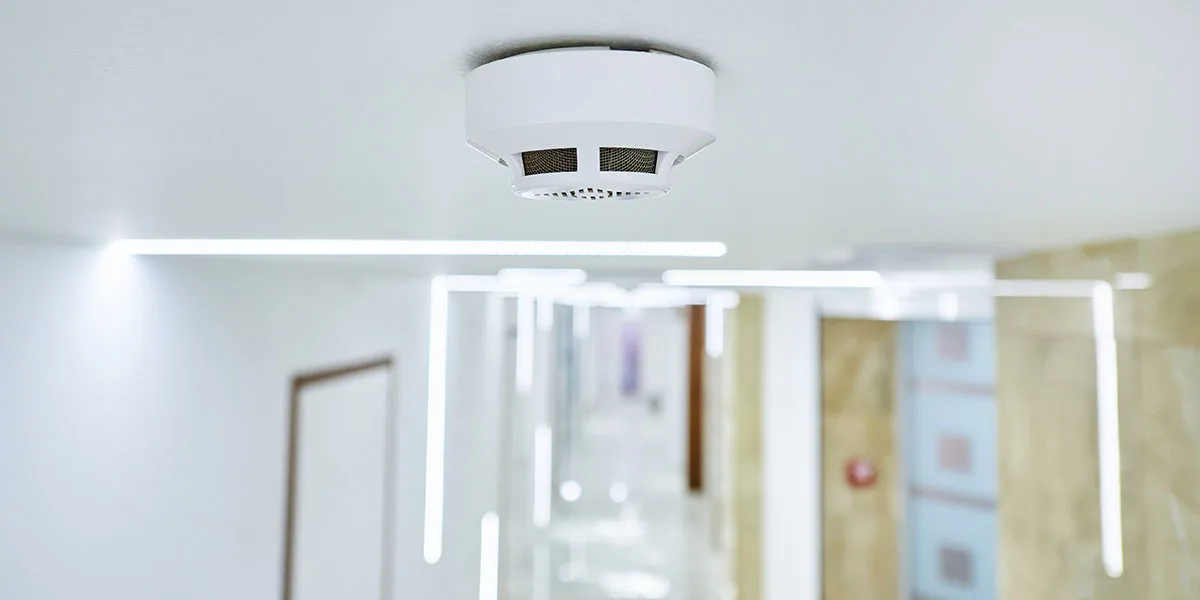
- Include smoke and heat detectors appropriate to the hazard profile of the occupancy
- Provide audible and, where required, visual notification throughout the building
- Be connected to a ULC-certified monitoring center in many commercial applications, particularly where 24-hour occupancy cannot be guaranteed
- Be installed and serviced by qualified contractors — in Ontario, this typically means contractors certified under the Ontario College of Trades or holding relevant electrical and fire alarm installation licences
The requirement for monitored fire alarm systems — connected to a ULC-certified central monitoring station — applies to many commercial properties, particularly those that are not continuously occupied. If your building is empty overnight or on weekends, a locally sounding alarm with no monitoring connection is unlikely to meet code requirements.
Fire Safety Plans
The Ontario Fire Code requires that most commercial properties maintain a written fire safety plan. A fire safety plan is a document that describes how a building will be managed in a fire emergency, and it must be:
- Prepared by or in consultation with the building owner or their representative
- Approved by the local fire department
- Kept on the premises and made available to fire department personnel on request
- Reviewed and updated whenever there is a change in occupancy, building use, or emergency procedures
The fire safety plan must address evacuation procedures, the roles and responsibilities of designated supervisory staff, the location and operation of fire safety equipment, and procedures for notifying the fire department and occupants in an emergency. For businesses with multiple shifts or high staff turnover, keeping the fire safety plan current and ensuring that all relevant staff are trained on its contents is an ongoing obligation, not a one-time exercise.
Fire Drills and Staff Training
The Ontario Fire Code requires that fire drills be conducted at a frequency appropriate to the occupancy classification. For most commercial properties, this means at least annually — though higher-risk or higher-occupancy buildings may be required to conduct drills more frequently. Drills must be documented, and records must be retained and available for inspection.
Beyond drills, designated supervisory staff — those with specific roles in the fire safety plan, such as floor wardens or evacuation coordinators — must receive training appropriate to their responsibilities. This training requirement is ongoing: when new staff take on supervisory fire safety roles, they must be trained before assuming those responsibilities.
Inspection, Testing, and Maintenance
This is the area where many commercial properties fall short of compliance, and it is the area that has the most direct day-to-day operational implications for business owners.
The Ontario Fire Code requires that fire alarm systems be inspected and tested at regular intervals. The specific schedule depends on the system type and occupancy classification, but for most commercial fire alarm systems the minimum requirements include:
- Annual inspection and testing of the full fire alarm system by a qualified contractor, in accordance with ULC S536 — the standard for inspection and testing of fire alarm systems in Canada
- More frequent testing for specific components — smoke detectors, for example, must be tested at least annually, while certain other components have different schedules
- Immediate inspection and testing following any modification, repair, or false alarm event that may have affected system integrity
- Documentation of all inspections, tests, and maintenance activities, retained on the premises and available for fire department review
Many fire protection service providers, including Axon Systems, perform compliance testing every 60 days for commercial clients — exceeding the minimum annual requirement and providing a more current picture of system health. More frequent testing catches developing issues before they become compliance failures or system gaps.
Exit and Emergency Lighting
The Ontario Fire Code also governs exit signs and emergency lighting — the systems that guide occupants to safety when normal lighting fails. Commercial properties are required to maintain illuminated exit signs at all exits and along egress routes, and to provide emergency lighting that activates automatically when normal power is interrupted. These systems must also be tested and documented on a regular basis — monthly functional tests and annual full-duration tests are standard requirements for most commercial properties.
Sprinkler Systems
Automatic sprinkler systems are required in many commercial buildings under the Ontario Building Code, particularly for new construction above certain size or height thresholds, and for buildings undergoing significant renovation or change of use. Where sprinkler systems are present, the Ontario Fire Code requires regular inspection, testing, and maintenance in accordance with NFPA 25, the standard for inspection, testing, and maintenance of water-based fire protection systems.
How the Ontario Fire Code is Enforced — and What Non-Compliance Costs
The Ontario Fire Code is enforced by local fire departments through inspections conducted by fire prevention officers. Inspections may be triggered by a complaint, following a fire alarm incident, as part of a routine inspection program, or at the time of a building permit application or change of occupancy.
When a fire prevention officer identifies a non-compliance issue, they issue a Fire Code Order requiring the deficiency to be corrected by a specified date. Failure to comply with a Fire Code Order can result in:
- Escalating fines under the Fire Protection and Prevention Act — individuals can face fines of up to $50,000 per day, and corporations can face fines of up to $100,000 per day for ongoing non-compliance
- Closure orders that require the building to be vacated until the deficiency is remedied
- Personal liability for building owners and, in some circumstances, directors and officers of corporate owners
- Denied or reduced insurance claims — commercial property insurers may deny claims arising from a fire where the insured property was not Fire Code compliant at the time of the loss
Beyond the formal enforcement consequences, the reputational and operational cost of a fire code violation that becomes public — or worse, that is associated with a fire event — can be severe and lasting.
Fire code compliance is not optional and it is not a box to check once. It is an ongoing operational obligation that requires regular attention, scheduled testing, and accurate documentation. Treating it as anything less creates real legal and financial exposure.
Fire Code Considerations by Industry
While the core Fire Code obligations apply broadly across commercial properties, some industries face additional or heightened requirements worth highlighting.
Restaurants and Food Service
Commercial kitchens are among the highest fire-risk environments in any industry. In addition to standard fire alarm requirements, restaurants must comply with requirements for commercial kitchen hood suppression systems — automatic fire suppression systems installed above cooking equipment that activate when heat or flame is detected. These systems require regular inspection and maintenance by certified contractors, and their maintenance records must be kept on-site. Failure to maintain a kitchen hood suppression system is a common fire code violation in the food service industry.
Hotels and Hospitality Properties
Hotels, motels, and other hospitality properties that include sleeping accommodations face some of the most stringent fire code requirements in the commercial sector. Guest rooms must be equipped with smoke alarms, fire alarm notification must reach all occupied areas of the property, and fire safety plans must account for guests who may be unfamiliar with the building’s layout. Regular fire drills for staff — particularly those on overnight shifts — are a specific compliance requirement for hospitality properties.
Healthcare Facilities
Hospitals, clinics, long-term care facilities, and other healthcare properties are subject to some of the most detailed fire safety requirements under the Ontario Fire Code, reflecting the presence of patients and residents who may not be able to self-evacuate. Fire safety plans for healthcare facilities must address the full range of occupant mobility limitations, and staff training requirements are more extensive than in most other commercial settings. Integration of fire alarm systems with the facility’s broader emergency management infrastructure is typically required.
Warehouses and Industrial Facilities
Industrial and storage occupancies face fire code requirements shaped by the nature of their contents. Facilities storing flammable liquids, combustible materials, or hazardous goods are subject to specific storage, detection, and suppression requirements that go well beyond the baseline commercial requirements. High-bay warehouses present particular challenges for smoke and heat detection — detectors must be positioned and calibrated for the ceiling heights and airflow patterns of the specific facility, not simply installed at standard commercial spacing.
Working with a Qualified Fire Alarm System Provider
Navigating Ontario Fire Code requirements is not something most business owners should attempt to do alone. The code is detailed, the requirements vary significantly by occupancy classification and building characteristics, and the consequences of getting it wrong — whether through under-compliance or through a poorly designed system that fails to perform in an emergency — are serious.
A qualified fire alarm system provider will:
- Assess your property and occupancy classification to determine exactly which requirements apply
- Design a fire alarm system that meets or exceeds those requirements, using equipment and installation practices that comply with relevant ULC standards
- Install the system with certified technicians and provide complete documentation of the installation for your records and for fire department review
- Connect the system to a ULC-certified Canadian monitoring center where required, ensuring that alerts are responded to immediately regardless of whether staff are on-site
- Manage your ongoing inspection, testing, and compliance documentation schedule — so you are never caught off-guard by an inspection and always have current records available
- Respond promptly when systems require service, repair, or modification following a false alarm or system event
The right provider is not simply a vendor who sells you equipment. They are an ongoing compliance partner who ensures that your fire alarm system continues to meet code requirements as your business evolves, as the code is updated, and as your building’s use and occupancy change over time.
Stay Compliant and Protected with Axon Systems
Fire code compliance is a legal requirement, an insurance condition, and above all a life-safety obligation. Getting it right requires professional system design, certified installation, ULC-certified monitoring, and a disciplined schedule of inspection, testing, and documentation.
Axon Systems provides complete commercial fire alarm installation and monitoring services for businesses across Ontario. Our systems are designed and installed by licensed technicians in accordance with Ontario Fire Code and ULC standards, connected to our Canadian-based ULC-certified monitoring center, and supported by a structured compliance testing schedule — with full documentation managed on your behalf. Whether you are installing a new system, upgrading an existing one, or looking to bring a non-compliant system into code compliance, our team is ready to help.
Contact us today for a free, no-obligation consultation. Call (844) 475-2966, Monday to Friday, 9 AM to 5 PM, or visit axonsystems.ca to request your free quote.